News On Japan

Hokkaido Minimum Wage Sets New High

HOKKAIDO - Hokkaido's minimum wage is expected to rise by 56 yen to a record 1,131 yen per hour in October, entering the 1,100-yen range for the first time, but workers and business owners are concerned that tax and social insurance thresholds could lead employees to limit their hours.

The prefecture's regional minimum wage, which serves as a benchmark for workers' pay, is now almost certain to receive the 56-yen increase.

Hokkaido's minimum wage stood at 126 yen per hour in 1972 and was gradually raised over the following decades. It reached 542 yen in 1992, about half the level planned for 2026, and exceeded 1,000 yen for the first time in 2024.

The new hourly rate of 1,131 yen is scheduled to take effect in October 2026.

At a supermarket in Sapporo's Kita Ward, workers welcomed the prospect of higher hourly pay, although some questioned whether the increase would directly translate into greater take-home income.

"I am happy that the hourly wage is going up, but because I work within the income limit for dependency under my husband's coverage, I will have to decide whether to work much more or ask the company to adjust my hours so that I do not lose that status," a part-time employee said.

The employee said she was concerned that working too many hours could require her to pay income tax and social insurance premiums.

Business owners are also worried not only about higher personnel costs but about the possibility of growing staff shortages as employees restrict their working hours.

"Many employees want to work without exceeding the income limit for dependent status," said Satoshi Yamakawa, president of Maruko Store. "When that happens, even if we ask them to work additional shifts, they will say they cannot work any more."

Yamakawa said the greater challenge for the supermarket may be maintaining daily staffing levels rather than absorbing the wage increase itself.

"Putting together daily shifts and dealing with unavoidable labor shortages will be more difficult for the store than the rise in wages," he said.

Japan sets minimum wages separately in each of its 47 prefectures rather than applying a single nationwide rate. The regional minimum wage generally covers all workers employed in the prefecture, including full-time, part-time and temporary staff, regardless of occupation. Some industries are also subject to separate minimum wage rules, with employers required to pay whichever rate is higher.

Source: 北海道ニュースUHB

News On Japan
POPULAR NEWS

The death toll from the record-breaking heavy rain in Chiba Prefecture has risen to eight, with one person still missing and damage reported to at least 170 homes as flooding, landslides, water outages and transport disruptions continued on August 14.

Japan's weather agency raised the volcanic alert level for Mount Aso in Kumamoto Prefecture from Level 2 to Level 3 on August 14 after volcanic tremors strengthened and gas emissions increased sharply, warning people to stay away from areas within about 2 kilometers of the Nakadake No. 1 crater.

Typhoon No. 17 was moving east near Minamitorishima on August 14 and is expected to continue weakening before becoming a tropical depression by August 16.

Google opened its first flagship store in Japan in Tokyo's Omotesando district at 2 p.m. on August 13, marking the company's first flagship retail location outside the United States.

A mysterious red light stretching vertically across the night sky over Kanagawa Prefecture has been identified as a rare "sprite," a brief luminous phenomenon that occurs high above thunderclouds at roughly the same time as powerful lightning strikes.

MEDIA CHANNELS
         

MORE Business NEWS

Tokyo stocks rose on August 14, with the Nikkei 225 closing at 68,714, up 0.59%, as investors continued buying semiconductor, artificial intelligence and earnings-backed shares, while the broader TOPIX gained 0.51% to 4,197 and reached another record high.

Rakuten Securities held an event for parents and children at the Tokyo Stock Exchange on August 13 to teach families about building assets ahead of the launch of the new Junior NISA program in January 2027.

Google opened its first flagship store in Japan in Tokyo's Omotesando district at 2 p.m. on August 13, marking the company's first flagship retail location outside the United States.

Tokyo stocks rose on August 13, with the Nikkei 225 advancing to 68,601.21, up 1.6%, as semiconductor and artificial intelligence-related shares followed Wall Street higher, while the broader TOPIX climbed to a record high despite continued concern over wholesale inflation, the yen and Bank of Japan rate-hike expectations.

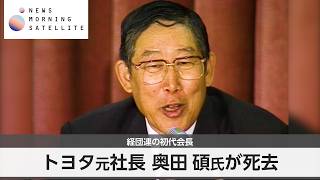
Hiroshi Okuda, a former president of Toyota Motor who helped lay the foundation for the automaker's emergence as one of the world's leading manufacturers, died of old age on August 8 at the age of 93.

Tokyo stocks ended nearly unchanged on August 12, with the Nikkei 225 at 66,988.82, as gains in energy and financial shares offset weakness in electronics and pharmaceuticals while investors weighed higher crude oil prices, a weaker yen and growing expectations for another Bank of Japan rate increase.

Sony Group and Taiwan Semiconductor Manufacturing Co. announced on August 11 that they have formally agreed to jointly produce next-generation image sensors, with total investment expected to reach about 1 trillion yen and mass production scheduled to begin in Kumamoto Prefecture in 2029.

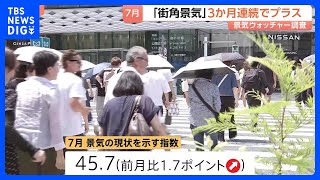
Japan's street-level economic sentiment improved for a third consecutive month in July, supported by sharply hotter weather after the end of the rainy season and the start of the summer vacation period, with stronger sales of products including men's parasols and air conditioners.