
News On Japan

Aeon Unveils AI-Powered Warehouse

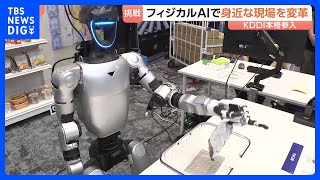
TOKYO - Japanese retail giant Aeon unveiled a logistics warehouse on October 30 equipped with "physical AI" robots capable of independently sorting and stacking products, allowing the company to automate approximately half of its warehouse operations while increasing loading efficiency to four times that of manual labor.

The new system uses robots equipped with artificial intelligence that can recognize the contents and weight of individual packages, calculate the most efficient stacking arrangements, and physically handle goods without requiring constant human intervention.

For supermarket operators handling a wide variety of products, loading and stacking have traditionally been among the most difficult warehouse tasks to automate. Packages differ in size, weight, and contents, requiring workers to determine the appropriate loading sequence and maintain a stable balance to prevent goods from collapsing or being damaged.

Aeon's newly introduced physical AI technology addresses these challenges by analyzing the characteristics of each package and determining how to stack goods safely and efficiently.

The robots can handle approximately 480 packages per hour, around four times the number processed through manual loading operations.

Unlike conventional warehouse automation systems that rely primarily on predetermined movements and standardized products, physical AI allows robots to interpret their surroundings, make decisions, and adjust their physical movements according to the objects they handle.

Aeon said the technology has already enabled it to automate approximately 50% of the work previously carried out at the warehouse, marking a significant step toward reducing reliance on manual labor in its distribution network.

The company plans to expand automation across its logistics facilities nationwide, targeting the automation of 80% of warehouse operations by around 2030.

The initiative represents a major investment in AI-driven logistics as Aeon seeks to improve productivity and streamline the handling of products distributed to its supermarket network.

Source: TBS

News On Japan
POPULAR NEWS

Typhoon No. 31 (In-Fa) was moving north-northwest over waters south of Japan as of 3 a.m. on November 3, according to the Japan Meteorological Agency, with forecasts indicating that the storm will turn north and then northeast before becoming an extratropical cyclone east of Chichijima around November 7, posing little direct threat to mainland Japan but raising concerns about dangerous waves along the Pacific coast.

Kyoto City announced plans on November 2nd to introduce tougher regulations on private lodging facilities, including a requirement for staff to be stationed permanently inside the properties or in nearby buildings, as complaints from residents continue to rise over noise and disruptive tourist behavior.

Spanish authorities have confirmed that a Japanese national was among the 69 people killed in a collision between two high-speed trains in central Spain on October 28, while Japanese officials are continuing efforts to establish the identities of victims following the disaster, which also left about 200 people injured.

Train services remain suspended on part of the JR Soya Line in Hokkaido on November 2 after a limited express train collided with a brown bear and derailed in Nakagawa on Saturday night, with replacement bus services beginning Monday morning between Asahikawa and Wakkanai.

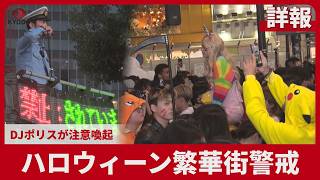
Tokyo's Shibuya district was crowded with costumed revelers on October 31 as Halloween fell on a Saturday for the first time in six years, prompting the Metropolitan Police Department to deploy hundreds of officers and impose traffic restrictions around the area's famous scramble crossing.

MEDIA CHANNELS
         

MORE Web3 NEWS

The AI Film Festival Japan 2026, one of Asia's largest international film festivals dedicated to works created using artificial intelligence, held its awards ceremony in Tokyo on November 1, attracting more than 730 submissions from over 60 countries and regions, with short films and animation accounting for the majority of entries.

A visitor stands outside a small restaurant in Kyoto trying to work out three things. Whether the place takes cards. Whether they need a reservation. And whether walking in without Japanese is going to be awkward for everybody.

Japanese retail giant Aeon unveiled a logistics warehouse on October 30 equipped with "physical AI" robots capable of independently sorting and stacking products, allowing the company to automate approximately half of its warehouse operations while increasing loading efficiency to four times that of manual labor.

Artificial intelligence is opening new possibilities for digital creativity, allowing people to transform ideas into illustrations, animated characters and short films without the extensive technical skills or expensive production equipment traditionally required, with platforms such as Japan-inspired AI art service PixAI bringing these capabilities to a growing community of creators.

Building a TikTok presence on a limited budget means weighing every expense. For creators comparing paid follower, like, and view packages, the headline price is only part of the decision.

Japanese telecommunications giant KDDI announced on October 28 that it will invest 30 billion yen in physical artificial intelligence by fiscal 2030, aiming to deploy more than 1,000 autonomous robots across retail, logistics and manufacturing facilities as Japan searches for solutions to its worsening labor shortage.

Japanese home appliance maker Balmuda announced a personalized AI radio service on October 27 that uses artificial intelligence to create approximately 10-minute programs tailored to individual listeners, combining news, weather forecasts and topics based on their interests.

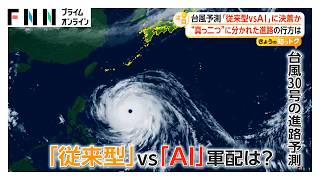
Artificial intelligence has demonstrated greater accuracy than conventional supercomputer models in predicting the path of Typhoon No. 30, which was forecast to approach Okinawa before turning northeast toward Japan, highlighting the growing potential of AI in weather forecasting while raising questions about how its predictions can be verified and used in disaster preparedness.