News On Japan

Internet Explorer shutdown to cause Japan headaches 'for months'

Jun 15, 2022 (Nikkei) - Microsoft bids farewell to Internet Explorer on Thursday, stirring a sense of panic among many businesses and government agencies in Japan that waited to update their websites until the last minute.

Since April, Tokyo-based software developer Computer Engineering & Consulting has been inundated with requests for help.

Those customers are mostly government agencies, financial institutions and manufacturing and logistics companies that operate websites only compatible with Internet Explorer.

Microsoft officially will halt support for Internet Explorer on Wednesday U.S. time after 27 years of service. Many users are transitioning to Google Chrome.

A March survey by information technology resource provider Keyman's Net revealed a large number of organizations in Japan relied on Internet Explorer, with 49% of respondents saying they used the browser for work.

They said the browser was used for employee attendance management, expenses settlement and other internal tools. In some cases, they have no choice but to use Internet Explorer because of clients' systems used to handle orders. Over 20% of these respondents did not know or had not figured out how to transition to other browsers after Internet Explorer's retirement.

Source: FNNプライムオンライン

News On Japan
POPULAR NEWS

Airports and railway stations across Japan were crowded on September 23 as travelers returned from their hometowns and holiday destinations on the final day of the five-day Silver Week holiday, with international flight arrivals reaching their peak and many afternoon Shinkansen services fully booked.

Extensive railway disruption continued across Chiba Prefecture on September 23 as JR East warned that several lines damaged by Typhoon No. 25 would remain closed beyond the Silver Week holiday, even as flights returned toward normal, all typhoon-related expressway closures were lifted and some highway bus services resumed. The storm has left widespread damage to railway tracks and embankments, with flooding, landslides and fallen trees complicating restoration work.

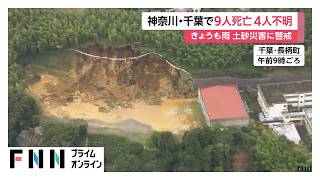
The death toll from Typhoon No. 25 rose to nine on September 23, with four people still missing in Chiba and Kanagawa prefectures, as renewed rainfall raised fears of further landslides in communities devastated by the storm.

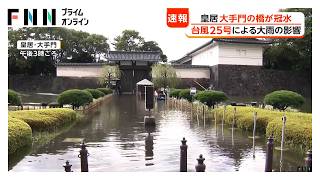
The road leading to Otemon Gate at Tokyo's Imperial Palace was flooded on September 22 after heavy rain from a typhoon caused water in the surrounding moat to overflow.

Japan came within two runs of producing one of international cricket's biggest upsets on September 22, pushing reigning T20 world champion India to the final ball before losing a rain-shortened match at Sano International Cricket Ground in Tochigi Prefecture.

MEDIA CHANNELS
         

MORE Sci-Tech NEWS

A rare pod of around 50 dolphins was spotted swimming through the Seto Inland Sea off Ozu, Ehime Prefecture, with dozens of dorsal fins repeatedly breaking the surface as the animals moved together.

Tesla unveiled its Cybercab in Japan for the first time on September 11, showcasing an AI-powered autonomous taxi designed without a steering wheel or pedals.

Large volumes of floodwater poured into the Metropolitan Area Outer Underground Discharge Channel in Kasukabe, Saitama Prefecture, following heavy rain on September 7, prompting the massive underground flood-control facility known as the "Underground Temple" to go into operation.

Fluorescent lamps that have illuminated Japanese homes and workplaces for decades are approaching the end of production, with Panasonic preparing to wind down a business it has operated since 1951 while experts warn that incorrectly replacing some fixtures with LEDs could create a fire risk.

Osaka-based spray nozzle maker IKEUCHI is expanding applications for its proprietary "Dry Fog," an ultra-fine mist that can cool, humidify and create visual effects without leaving surfaces wet, with the technology now being used in factories, livestock farming, crop cultivation and tourist attractions in Japan and overseas.

Japanese companies are moving closer to commercializing photonics-electronics convergence technology that replaces part of conventional electrical data transmission with optical signals, potentially allowing huge volumes of data to move with lower latency while sharply reducing power consumption as artificial intelligence drives rapid growth in electricity demand from data centers.

A new generation of optoelectronic integration technology developed over four decades by Japanese companies is moving closer to commercialization, offering a way to transmit huge volumes of data with low latency while sharply reducing the electricity consumed by data centers as artificial intelligence drives explosive growth in computing demand.

Dyson CameraJet™ turns the smart toothbrush into an active sensing product, making useful feedback and clear privacy design part of the same engineering brief.