News On Japan

Purification Rite Performed Ahead of Aoi Matsuri

KYOTO - A purification ritual known as the "Misogi no Gi" was held ahead of the Aoi Festival, one of Kyoto’s three major festivals, as the Saio-dai and other participants underwent a traditional cleansing ceremony at Shimogamo Shrine.

The Misogi no Gi is a Shinto rite in which the festival’s central figure, the Saio-dai, along with around 50 women who will take part in the procession, purify themselves, with the ceremony alternating each year between Kamigamo Shrine and Shimogamo Shrine.

This year’s ritual took place at Shimogamo Shrine, where Mao Shiomi, the 68th Saio-dai dressed in a formal junihitoe robe, first received a purification blessing before slowly immersing both hands into the Mitarashi River flowing through the shrine grounds, symbolically cleansing herself. Afterward, she wiped her hands with paper known as "chozugami" and released it into the river while praying for the safe and successful staging of the festival.

The Aoi Festival will be held on May 15th, featuring the Saio-dai and approximately 500 participants in an elegant procession recreating scenes from the Heian period as they parade through Kyoto’s streets lined with fresh spring greenery.

Source: YOMIURI

News On Japan
POPULAR NEWS

Former Nissan Motor Chairman Carlos Ghosn said the automaker is in a "state of emergency" and signaled he would be willing to return as chief executive officer, arguing that only a true decision-maker in the CEO role could rescue the company.

The entire Negishi Housing Area in Yokohama, Kanagawa Prefecture, has been returned to Japan for the first time in 79 years, ending its use as a residential district for U.S. military personnel and their families.

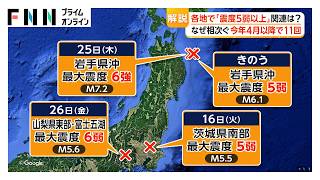
Strong earthquakes have continued to shake parts of Japan in recent weeks, with 11 temblors measuring lower 5 or above on the Japanese seismic intensity scale recorded across the country since April 2026.

A Kintetsu Railway train derailed inside Kyoto Station on the morning of June 29, forcing partial suspensions on the Kintetsu Kyoto Line for the rest of the day and causing long delays that hit commuters, students and tourists.

A section of stone wall at Hikone Castle, one of Japan’s few surviving original Edo-period castles and a National Treasure whose main keep remains intact more than 400 years after its construction, collapsed after heavy rain caused by Typhoons No. 7 and No. 8, Hikone city officials said.

MEDIA CHANNELS
         

MORE Travel NEWS

A man in his 70s was injured early on June 30 after being attacked by a bear near an elementary school in Tochigi Prefecture, as bear-related incidents continue to rise across Japan ahead of the full onset of summer heat in July.

Kyoto’s Gion Festival, one of Japan’s three major festivals, began on July 1 with the Osendo ritual at Yasaka Shrine, where the child messenger and his attendants prayed for the safe completion of their major role in the monthlong event.

A Kintetsu Railway train derailed inside Kyoto Station on the morning of June 29, forcing partial suspensions on the Kintetsu Kyoto Line for the rest of the day and causing long delays that hit commuters, students and tourists.

A section of stone wall at Hikone Castle, one of Japan’s few surviving original Edo-period castles and a National Treasure whose main keep remains intact more than 400 years after its construction, collapsed after heavy rain caused by Typhoons No. 7 and No. 8, Hikone city officials said.

The Japan Meteorological Agency said at around 2 p.m. on June 29 that the rainy season appeared to have ended in Okinawa, marking a later-than-usual start to summer after an especially wet period.

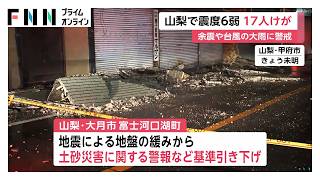
Japan’s weather agency carried out field inspections in Yamanashi Prefecture on June 28 after a powerful earthquake struck the Fuji Five Lakes area late on June 26, registering a lower 6 on Japan’s seismic intensity scale in Fujikawaguchiko and injuring six people.

According to updates on June 28, the double-typhoon system that brought record rain, flooding, landslides and fallen trees to parts of Japan has moved away, but Kanto remains under cloudy rainy-season skies, with intermittent rain still possible and saturated ground keeping the risk of landslides high in areas hit by heavy rain.

The Kanto region is experiencing an unusual June, with three typhoons approaching the area during the month and rainfall totals already reaching record levels in some locations.