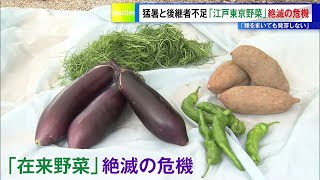


TOKYO - Water spinach, a heat-resistant leafy vegetable that can cost about half as much as spinach and be regrown at home from leftover stems, is attracting attention in Japan as households look for affordable ways to cope with rising summer vegetable prices.
At a supermarket in Tokyo, water spinach was displayed alongside komatsuna and other leafy greens for 105 yen, about half the price of spinach.
The vegetable, which originated in Southeast Asia, takes its Japanese name, kusensai, from the hollow center of its stems. It is rich in vitamins and iron and is also considered useful for preventing summer fatigue.
Shoppers said the vegetable has become increasingly common at supermarkets in recent years. One customer said it appeared to be becoming cheaper, while another said its relatively stable price made it easier to buy than other vegetables.
Prices for many summer vegetables have risen during the extreme heat, but water spinach grows well in hot conditions, allowing supplies to remain comparatively stable. Bags of the vegetable were selling steadily at the Tokyo store.
Some shoppers said they planned to boil it briefly and eat it with soy sauce, while others used the leaves in miso soup. One customer said it offered a welcome alternative when the family had grown tired of komatsuna and spinach.
A man who bought a 100-yen bag decided to cook water spinach for the first time because his wife likes the vegetable. He prepared a stir-fry with pork and wood ear mushrooms, heating garlic in sesame oil before adding the meat, water spinach, mushrooms and oyster sauce.
The dish took about 10 minutes to prepare and cost roughly 250 yen per serving.
"The stems stayed properly crisp even after cooking, so I think it turned out well," the man said. His wife reportedly enjoyed the dish and said she wanted to eat it again.
Water spinach can also be grown easily at home, making an already inexpensive vegetable even more economical. A short piece of stem can develop into a large plant in about six weeks and produce repeated harvests with relatively little work.
A home-gardening specialist who has taught more than 1,000 people how to grow water spinach said beginners may find it easiest to use stems from vegetables purchased at a supermarket.
The leaves are first removed and the stems are cut diagonally before being placed in water. Roots begin to emerge after about three days. The stems can then be transferred to a planter filled with soil and placed in a sunny location, where they require daily watering.
The vegetable can be harvested after about one month. Growers are advised not to pull out the entire plant but to cut the stems partway up, allowing new shoots to emerge from the remaining roots.
The number of shoots can then multiply, increasing the amount available for later harvests. Once firmly rooted, the plant can be harvested about every two weeks, creating what the gardening specialist described as an almost endless supply.
A household can produce roughly the amount contained in a supermarket bag, enough to provide a steady supply for family meals, the specialist said.
Water spinach is commonly associated with Chinese and Southeast Asian cooking, but it can also be used in Italian dishes. An Italian chef with 17 years of experience who operates a restaurant in Kanagawa Prefecture demonstrated a water spinach peperoncino that can be prepared in about 10 minutes.
The ingredients included water spinach, pasta, garlic, olive oil, chili pepper, salt and fish. The vegetable was cut into pieces about 3 centimeters long, while the garlic was roughly chopped and cooked over low heat in olive oil.
The stems were added first to preserve their crisp texture. The leaves were added about one minute before the pasta finished boiling, and the cooked pasta was then mixed into the pan with a small amount of pasta water. The fish was added after the heat was turned off.
The finished dish retained the vegetable's crisp texture, while the slightly spicy seasoning complemented its flavor. Tasters said that although water spinach is strongly associated with Chinese food, it also worked well in Western-style dishes.
Source: TBS