
News On Japan

Hitachi Turns to AI to Ease Labor Shortages

TOKYO - Hitachi is stepping up the use of digital technology, autonomous robots and physical AI to address Japan's growing labor shortage, showcasing systems designed to automate factory work and maintain critical infrastructure at one of the group's largest technology exhibitions.

The Hitachi Social Innovation Forum 2026 JAPAN features more than 50 of the Hitachi Group's latest technologies, including robotic arms capable of gripping screws and moving them to designated positions, as well as autonomous transport robots in a variety of shapes.

Hitachi President and CEO Toshiaki Tokunaga said Japan is projected to face a shortage of 11 million workers by 2040. "Autonomously evolving digital infrastructure is the new form of social infrastructure that Hitachi is aiming to create," he said.

A major focus of the exhibition is technology intended to help overcome labor shortages and other challenges facing society.

One system creates a virtual environment that reproduces detailed information about nuclear power plants, including the positioning and distances between pipes and other equipment. The technology allows safety and other conditions to be examined without workers having to visit the site.

Hitachi said it eventually aims to combine the virtual technology with robots that can inspect locations when abnormalities are detected.

The company also demonstrated robots equipped with Hitachi-developed physical AI. The robots can handle cables with the appropriate amount of force and perform wiring work, tasks that require delicate physical control.

Hitachi plans to continue using digital technology and physical AI as it works toward creating what it describes as the social infrastructure of the future.

Hideki Minato of Hitachi's AI Services Promotion Department said production sites manufacturing many different types of products still depend heavily on communication between workers. "Our goal is to use AI's ability to think to optimize factory operations that have traditionally been developed through human experience, and to supplement workplaces suffering from labor shortages," he said.

Source: FNN

News On Japan
POPULAR NEWS

Tokyo's Fuchu Prison is adapting its meals and living arrangements to a growing foreign inmate population, with about one in four prisoners coming from overseas and staff balancing religious, cultural and dietary needs against tight budgets and the demands of running one of Japan's largest prisons.

Tesla unveiled its Cybercab in Japan for the first time on September 11, showcasing an AI-powered autonomous taxi designed without a steering wheel or pedals.

China will sharply raise visa fees for Japanese nationals entering the country from September 14, with the cost of a single-entry visa increasing to 16,750 yen, about 7.4 times the current level.

Tada Shrine in Kawanishi, Hyogo Prefecture, has filed for protection under Japan's Civil Rehabilitation Act, becoming the first shrine in the Kansai region and only the third nationwide to enter bankruptcy proceedings, according to Teikoku Databank.

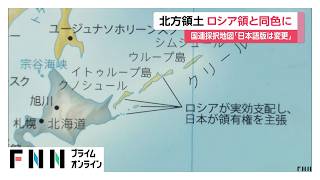
Japan has asked for changes to an Equal Earth world map that depicts the Russian-controlled Northern Territories in the same color as Russia, prompting the map's creator to say the Japanese-language version will be revised while the English version will remain unchanged.

MEDIA CHANNELS
         

MORE Web3 NEWS

A medical institution opening in Nagoya's Showa Ward in October will use artificial intelligence-enhanced PET-CT and MRI equipment to produce clearer images and reduce the risk of cancer being overlooked during diagnostic examinations.

The rapid spread of generative artificial intelligence is fueling construction of data centers across Japan, but plans for two large facilities beside a residential neighborhood in Minoh, Osaka Prefecture, are raising concerns over sunlight, noise and low-frequency sound as authorities confront gaps in rules governing the increasingly important infrastructure.

Expectations are growing for the wider use of "physical AI" robots, but concerns over hacking, breakdowns and maintenance are prompting companies to develop new security and support systems as the technology moves closer to everyday use.

Isuzu Motors has begun full-scale development of a second-generation "AI truck" capable of making driving decisions on its own, as Japan's largest commercial vehicle maker by domestic market share aims to introduce Level 4 autonomous driving in fiscal 2027 to help address a worsening shortage of truck drivers.

Toridoll Holdings, the operator of Marugame Seimen, has introduced an artificial intelligence system trained on the thinking and speaking style of President Takaya Awata, giving employees a way to consult a virtual version of the company's founder as the restaurant group expands to around 1,200 locations in Japan and overseas.

Hitachi is stepping up the use of digital technology, autonomous robots and physical AI to address Japan's growing labor shortage, showcasing systems designed to automate factory work and maintain critical infrastructure at one of the group's largest technology exhibitions.

Japanese startup Enactic is developing physical AI technology that combines artificial intelligence with robotic hardware, earning recognition from Nvidia while pursuing an unusual open-development strategy that makes its technology available to the public.

SB Energy, a U.S. power infrastructure company for artificial intelligence backed by SoftBank Group, said on September 1 that it has filed for an initial public offering on the Nasdaq stock market with the U.S. Securities and Exchange Commission.