NARA - Production of tencha, the raw material used to make matcha, has begun in Yamazoe, Nara Prefecture, a village known for producing Yamato tea, with around 20 tons expected to be manufactured by the end of July.
Yamazoe, located on the border between Nara and Mie prefectures, is known as a production area for Yamato tea, which is prized for its rich umami flavor developed through the large difference between daytime and nighttime temperatures.
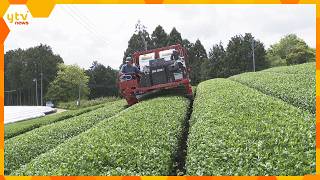
At tea fields operated by Yamatoen, which produces and sells tencha for use in matcha, workers have been harvesting fresh tea shoots since mid-May.
Tea leaves grown for tencha are shaded from sunlight for 20 days, a process said to enhance their umami flavor.
After harvesting, the leaves are taken to a factory, where they are steamed with high-temperature steam before being carefully dried to produce deep green tencha.
Yamatoen plans to continue harvesting new tea leaves through the end of July and produce around 20 tons of tencha, while shipments overseas have also been increasing in recent years.
The global matcha boom has gathered pace over the past decade, as the finely powdered green tea has expanded beyond traditional tea ceremony use into lattes, desserts and other products sold by cafes and food companies in markets including the United States and Europe. Demand has been supported by rising interest in Japanese food culture, health-conscious beverages and the spread of matcha drinks and recipes on social media.
Japan's production of tencha, the shaded tea leaves used to make matcha, has grown rapidly in response. Output reached 5,336 tons in 2024, about 2.7 times the level recorded a decade earlier, according to data compiled by the Ministry of Agriculture, Forestry and Fisheries. However, the increase has taken place against a broader decline in Japan's tea-growing area and continued weakness in demand for conventional leaf tea at home.
Exports have also surged. Japan exported 12,612 tons of green tea in 2025, with powdered green tea, a category that includes matcha and powdered tea, accounting for 8,718 tons, or 69% of the total. Powdered green tea generated 60.4 billion yen in export value, accounting for 84% of total green tea export earnings, with particularly strong demand from the United States and Europe. Its average export price was 6,927 yen per kilogram, more than twice the price of other green tea exports.
The sharp increase in demand has led to shortages, particularly for high-quality matcha produced from spring-harvested tencha. Major producers in Kyoto and other leading tea regions began limiting sales of some matcha products in late 2024 and 2025 as overseas orders and purchases by tourists outpaced available stocks. A report published by Japan's House of Councillors in December 2025 said overseas demand for matcha had risen so rapidly that domestic supply was unable to keep pace, with producers facing constraints in converting fields to tencha, improving productivity and expanding processing facilities.
Supply pressure has also pushed up prices. The agriculture ministry said tencha was already priced at about 2.7 times the level of sencha in 2024, while first-harvest tea prices increased in major production regions in 2025. By the end of 2025, a ministry survey found tea wholesalers and retailers were seeking higher procurement volumes for the 2026 crop, indicating that tight supply conditions were continuing into the latest harvest season.
The shortage has highlighted the difficulty of quickly expanding matcha output. Tencha leaves must be grown under shade before harvest and then processed and ground into powder, requiring specialized cultivation and equipment. As overseas demand continues to rise, production areas such as Yamazoe are becoming increasingly important to Japan's efforts to secure supplies of matcha ingredients while expanding exports of one of the country's most sought-after agricultural products.
Search: Matcha
Source: YOMIURI